
Landscape fabric, often called weed barrier, is one of the most debated materials in our industry. Homeowners ask for it by name, and plenty of contractors install it under everything by default. We don't. Here's what it actually does, where it backfires, and how we decide when to use it.
What weed barrier does well
When it's used in the right spot, weed barrier earns its place:
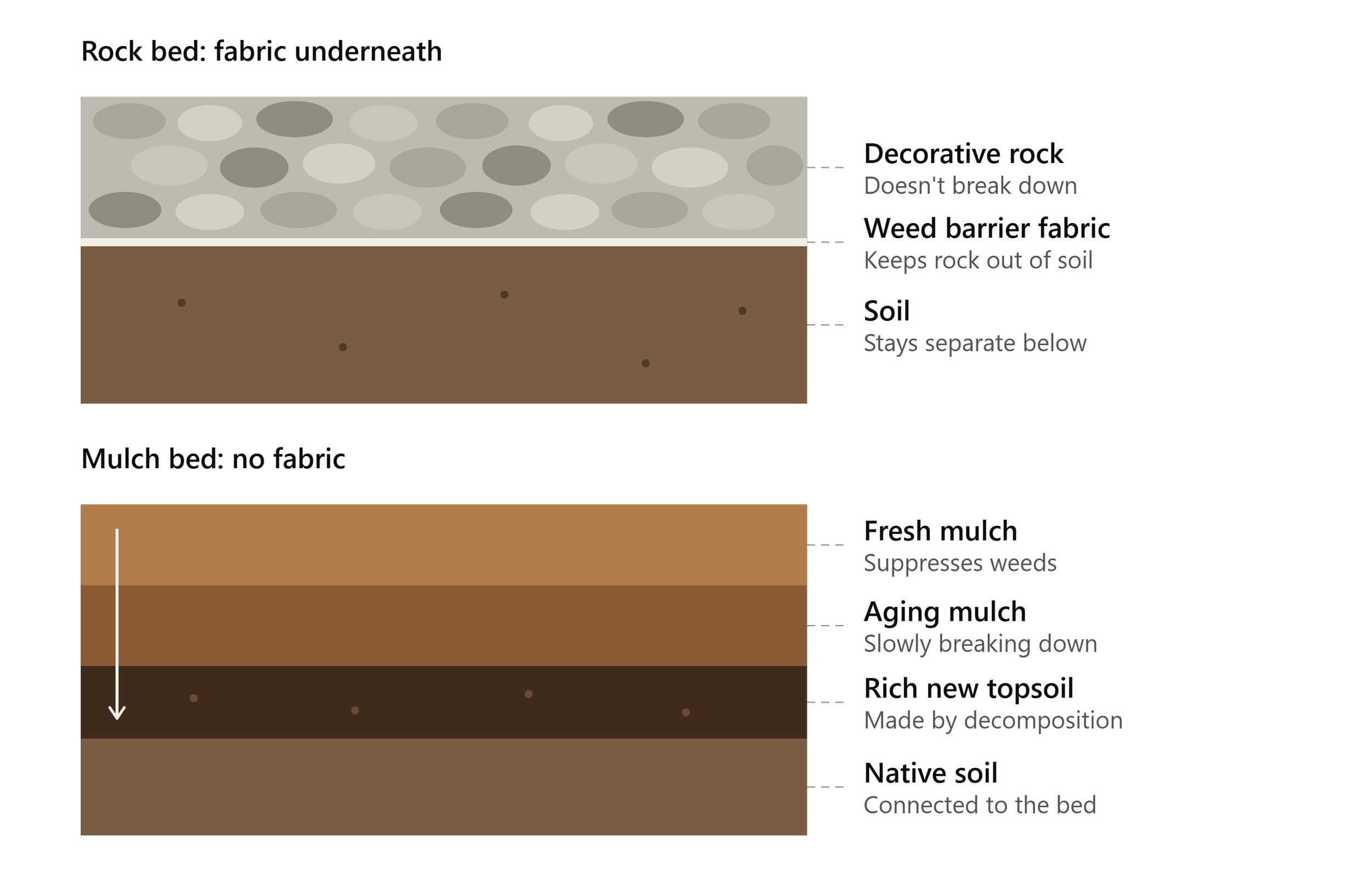
It separates materials. Under rock, it keeps stone from sinking into the soil below, which preserves the depth and look of the installation for years.
It blocks weeds that already exist. A good barrier stops seeds in the soil beneath it from reaching light, and it slows perennial weeds trying to push up from below.
It keeps maintenance down early on. In the first few seasons, a properly installed bed has noticeably fewer weeds to pull.
It makes rock easier to maintain. When a rock bed needs refreshing, the fabric helps keep the stone clean and separate from the dirt.
Where it goes wrong
The promise of "no more weeds" is where weed barrier lets people down. Here's what we see in the field.
Weeds grow on top of it, not through it. Most weeds in a mature bed never came from the soil below. Wind, birds, and runoff deliver seeds to the surface constantly. Once a thin layer of leaves, dust, and decomposed mulch builds up on top of the fabric, those seeds have everything they need to sprout.
The fabric can make those weeds harder to remove. Weeds that root into debris on top of the barrier send roots into the fabric's weave. When you try to pull them, the fabric tears, lifts, or gets tangled up, and you end up with a bigger repair than the weed was ever worth. Some weeds, especially grasses and nutsedge, will push straight through anyway.
It cuts the soil off from the bed above. Fabric limits the exchange of air, water, and organic matter between mulch and soil. Healthy soil biology depends on that connection, and plants in the bed are the ones that suffer for it.
It makes future planting and amending harder. Want to add a shrub, divide a perennial, or work in compost? You'll be cutting through fabric, and the cut edges rarely lie flat again.
What happens to mulch over time
Mulch isn't permanent, and that's a good thing. Organic mulch breaks down gradually, feeding the soil as it decomposes. Over a few seasons it turns into the dark, crumbly material that plants love.
Put weed barrier underneath, and that process hits a wall. The mulch decomposes on top of the fabric, and the fabric blocks the finished material from working its way down. Instead of building better soil, you get a layer of compost-like material sitting on plastic-like fabric, which is exactly the kind of seedbed weeds love. Eventually the fabric becomes visible, tears through, or has to be pulled out, and that's a messy job in an established bed.
Without fabric, the same mulch does its job: it suppresses weeds while it's fresh, improves the soil as it breaks down, and gets topped off each year to keep the cycle going.
How we decide: rock yes, mulch no
Our approach is simple.
We use weed barrier under rock installations. Rock doesn't break down, so there's no organic material feeding the soil, and stone left directly on dirt will gradually work its way down into it. The barrier keeps the rock where we put it and cuts down on weeds from below.
We don't use it under mulch or soil installations. Those beds are meant to be living systems. We'd rather build healthy soil, plant densely, mulch at the right depth, and maintain the bed, than add a layer that works against all of it.
Tips for fewer weeds, with or without fabric
Keep mulch at about 2 to 3 inches deep. Deeper isn't better, and piling it against plant stems causes problems.
Refresh mulch on a regular schedule rather than letting it thin out.
Plant densely enough that mature plants shade the soil.
Use a pre-emergent where appropriate, and pull weeds while they're small.
Keep clean edges so grass and turf don't creep into beds.
The bottom line
Weed barrier isn't good or bad. It's a tool, and it works best where the material on top won't decompose. For rock, it's worth it. For planting beds, healthy soil and good mulching habits beat fabric every time.
If you're planning a new installation or fighting a bed that's gone sideways, we'd be happy to talk through what will work best for your property.